
Originally published on BP Debate Union. Republished here as part of my personal debate archive.
Debating the Digital Doodle: An Analysis of “THS the rise of customized stickers”
In an age dominated by digital communication, the way we express ourselves online is constantly evolving. Beyond text and standard emojis, customized stickers – user-generated or modified images shared in messaging apps – have surged in popularity. They add flavour, humour, and personality to our chats. But is this rise a wholly positive development? The motion, “This House Supports (THS) the rise of customized stickers,” invites us to explore the benefits and drawbacks of this phenomenon.
Let’s break down the key arguments likely to surface in such a debate.
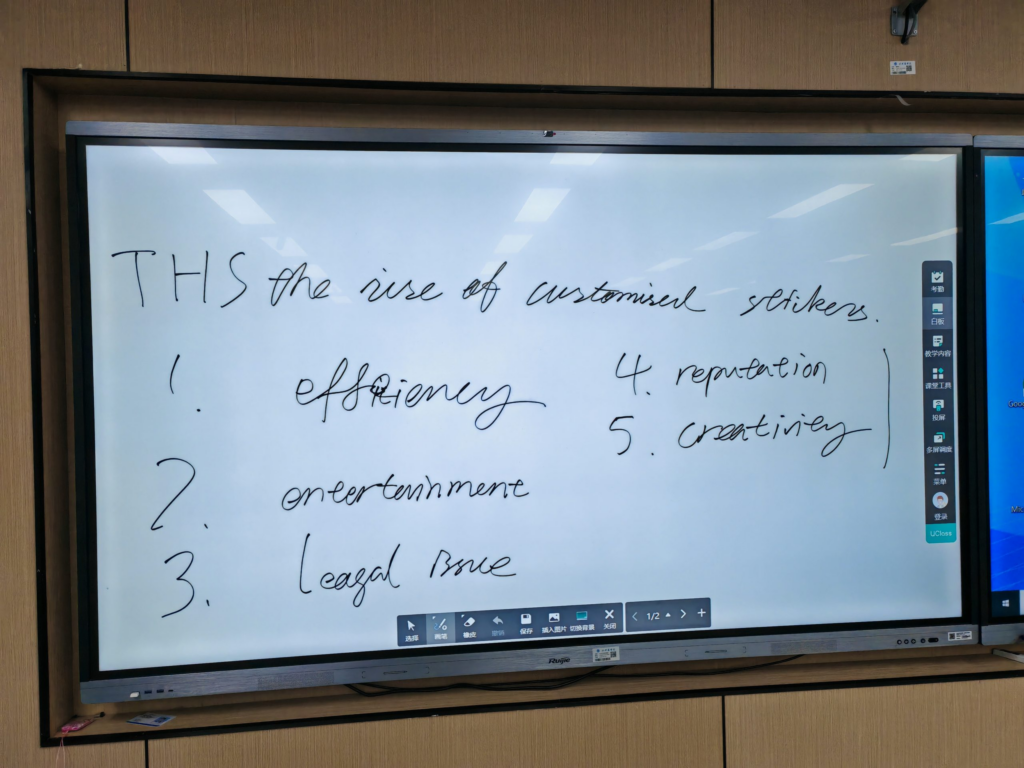
The Case for Support (Government)
The Government side argues that the rise of customized stickers is, on balance, a beneficial trend, enhancing our digital lives in crucial ways.
1. Enhancing Communication & Emotional Nuance
- The Argument: Customized stickers transcend the limitations of text and standard emojis. They convey complex emotions, sarcasm, irony, and shared context with remarkable speed and precision. A single, well-chosen sticker can encapsulate a feeling or reaction far more effectively than a sentence, leading to richer and more authentic conversations.
- Impact: This leads to clearer understanding, reduced ambiguity, stronger interpersonal connections, and a more engaging communication experience online.
2. Fostering Community & Identity
- The Argument: Shared stickers act as a unique language within specific groups – friends, families, fan communities, or subcultures. Using or understanding these stickers signifies belonging and reinforces a shared identity. They create “in-jokes” and cultural touchstones on a micro-level.
- Impact: This strengthens social bonds in an often-impersonal digital world. It allows diverse communities to build and express their unique identities, fostering a sense of belonging and combating social isolation.
3. Democratizing Creativity & Digital Culture
- The Argument: Creating customized stickers often has a low barrier to entry. This empowers everyday users to become active participants – creators – in shaping online culture, rather than just passive consumers. It’s a modern form of folk art, reflecting current events, memes, and personal moments.
- Impact: This fosters widespread creativity, encourages user engagement, and contributes to a more vibrant, dynamic, and bottom-up digital public sphere.
The Case Against (Opposition)
The Opposition side raises concerns, arguing that the rise of customized stickers brings significant problems that may outweigh the benefits.
1. Legal & Ethical Quagmires
- The Argument: The creation and sharing of customized stickers frequently venture into legally grey areas. This includes:
- Copyright Infringement: Using images, characters, or artwork without permission.
- Right to Privacy/Image Rights: Using personal photos without consent.
- Defamation & Misuse: Creating stickers that mock, harass, or spread negative portrayals of individuals.
- Impact: This can lead to legal disputes, harm reputations, violate privacy, and create a culture where intellectual property and personal image rights are disregarded.
2. Communication Breakdown & Misinformation
- The Argument: While stickers can enhance communication within groups, they can also exclude those unfamiliar with the context, leading to misunderstandings. Furthermore, stickers can be used to spread misinformation, harmful stereotypes, or propaganda in a visually appealing and easily shareable format, potentially trivializing serious issues.
- Impact: This can create social fragmentation, hinder effective communication in diverse groups, and contribute to the spread of “junk information” or actively harmful content.
3. Digital Clutter & Oversaturation
- The Argument: The sheer volume of stickers, especially repetitive or low-quality ones, can become overwhelming. They can clutter chat interfaces, distract from important messages (especially in professional or emergency contexts), and lead to a form of “meme fatigue.”
- Impact: This can degrade the quality of communication, cause annoyance, and make it harder to focus on substantive content.
Key Clashes in the Debate
This debate will likely revolve around several central tensions:
- Creativity vs. Copyright: How do we balance the value of user-generated creativity with the need to protect intellectual property and personal rights?
- Community vs. Exclusion: Does the community-building aspect outweigh the potential for creating digital cliques and excluding outsiders?
- Expression vs. Misinformation: Is the enhanced emotional expression worth the risk of facilitating the spread of harmful or misleading content?
- Benefit vs. Manageability: Are the benefits significant enough to justify supporting the trend, and can the harms be effectively managed through platform moderation and existing laws?
Conclusion
The rise of customized stickers is more than just a fleeting digital trend; it reflects fundamental shifts in how we communicate, build communities, and express ourselves online. A debate on this motion forces us to weigh the vibrant, creative, and connective potential of this medium against the real and complex challenges it presents regarding legality, clarity, and content control. Both sides have compelling points, and the winning team will likely be the one that best navigates these complexities and proves whether, on balance, this rise is something we should embrace or approach with significant caution.
Leave a Reply