
Originally published on BP Debate Union. Republished here as part of my personal debate archive.
Hi Debaters,
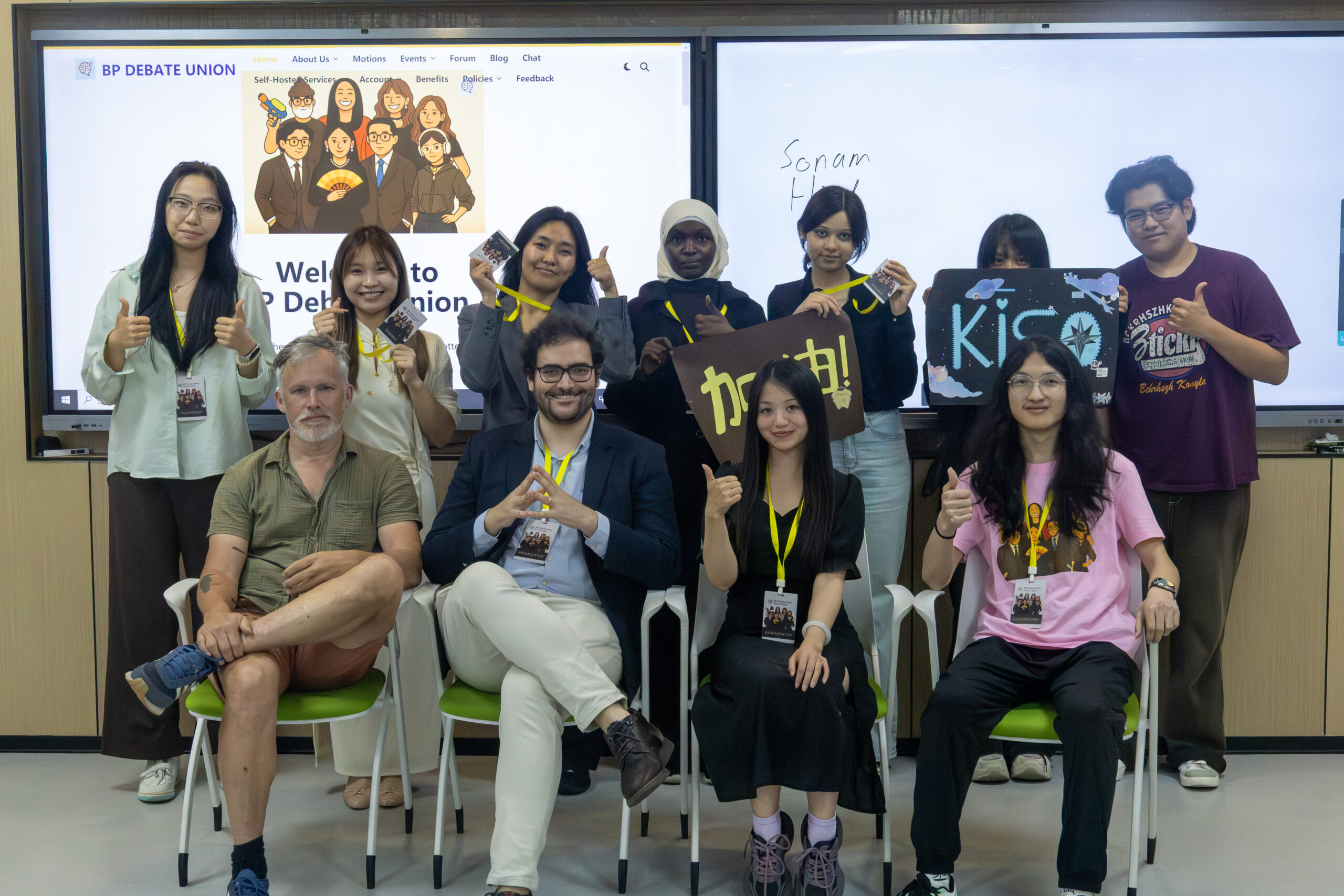
This is Antony, I’m really glad you participated in our second edition of Bowen Cup Debate Tournament, and I’m genuinely happy to have heard your ideas and potentially given you some inspiration.
Motion Reviews & Analysis
The motions are from SIDO and FLTRP.
R1

THS the aggressive integration of generative AI (e.g. ChatGPT, DeepSeek, etc.) into the education system.

OG tried to prove us that AI benefits study in multiple ways, e.g., it gives us easy access to information, it boosts study, and people with higher mental capacity know what they want and won’t easily abuse them which causes side-effects. They also mentioned an example of BP Debate Union, which is us, using AI on our official website to help people access information and learn about debate.
OO tried to rebut OG on the idea of “abusing AI”, claiming that people with high mental capacity or those who won’t overuse or grow dependent on AI are minorities, what we need to care more is the majority on the society, those who are being influenced by AI.

OG gave us definition on “generative AI” by giving us examples, ChatGPT, Claude, Gemini, DeepSeek, which often could be inaccurate.

They also mentioned examples around themselves, their roommates who misuses AI. They also gave us clear mechanism of how AI makes people’s academic pressure even heavier by allowing students not listening on class however finding them unable to keep up with the progress using AI.
OO pointed out that OG only talked about higher education later in their speech, however not mentioning about other period of educations, by offering a POI. OG then struggled to maintain consistency after the POI, expanding their definition of “education system” from higher education only to also lower education but with supervisions.

OO did quite well in POI, as OG did not define “education system” at the very beginning, and crashed part of OG’s arguments.
From the Panelists
Unclear Definitions

PM carries the responsibility of offering us the status quo and the definitions of the key terms in the motion, to make the rest of the houses and the panelists aware of the issue that’s been going on in society, and manage to make a change to possibly solve them.
One thing that worth thinking about is why we are integrating (or not) generative AI to the education system, for me it’s these two reasons for integrating:
- Self-learning
- Quick and massive info source
One of the reasons that immediately came to my mind was:
- Inaccurate answer
Considering AI are just anticipating the possibility of the next word, it does not understand the question itself, it can be inaccurate. That is why companies like OpenAI, Anthropic are focusing on reducing their models’ hallucinations. This can also be brought up in the status quo or definitions for the Government’s case.
So here we’ve got one thing to talk about: Whether the use of AI can help us learn fast and well, or it gives wrong answers that worsens learning, or even it gives correct answers (as proven by the benchmarks), will the wrong answers, which you can’t control neither anticipate to prevent, do detrimental harm to the education system or students.

Apart from “generative AI”, there is another term that can be brought up, which is neglected by both teams –“education system”.
What is education system? are we talking about the whole system or only part of it? Is the incentive of the system to produce more elites to the society? Does it want to boost people’s learning? If integrating generative AI boosts this goal, if the motion’s incentive aligns with the education system’s, then why not? If generative AI are so untrustworthy and uncontrollable, making it does not align with the goal, or only partially align, then should we do?
Where do we integrate generative AI to the education system? What changes does it bring up? Why education system?
As is mentioned before the teams focused on high efficient self-learning, but is self-learning really considered as part the education system? Is the education system something in parallel with self-learning? We have no idea about that.
So there are plenty of space to construct the arguments on, which I won’t be able to list here one by one as that would be a whole book to write.
Consistency in Definition
PM did not gave us definition on “education system”, which later DPM tried to make up, by defining it as “only in higher educations”. It is worth noticing that you need to be consistent when arguing upon your definitions and opinions without changing them later because of a POI or a question or rebuttal, otherwise it makes people question your ideas or your whole framework. This is a genuine suggestion on debate, not personal.
R2

THO the narrative that “time heals all wounds”

OG tried to argue that “time heals all wounds” is false, as there are wounds that won’t self-recover as time goes by, OG gave us definitions on heal and time, and wounds, mostly focusing on types of wounds, which they took both physical and mental wounds into consideration.
Both houses debated on both mental and physical level, by giving us examples of family members or roommates, and cancer.
DPM did great job in continuing constructing on PM’s framework, which really made it a great cooperation within team.

From the panelists
What is the motion really talking about?
It is not whether “time heals all wounds” is true or not, it is more about the impact this narrative has on people.

I didn’t quite explain it well when giving OA, but now let’s put it clearer. If we are arguing about the validation of the narrative, then cancer worsens with time, making the whole debate meaningless because it is already proven that not all wounds would heal.
Here is my conversation with ChatGPT on this, which may be beneficial to you.
https://chatgpt.com/share/6a13faff-3820-83e8-b8e2-8555957f3357
I also wrote about it here on my blog, which I failed to sync to BPDU blog yet.

More?
For more I encourage you to continue from the conversation I had with ChatGPT using the latest models, there are a lot to talk about, on the narrative’s impact on its people, i.e., causing negligence on mental health, preventing from seeking help, etc.. It might be beneficial for overcoming the pain in short period (or just numb it), but in the future it might cause harm.
Final Round

THS the increasing popularity of Reverse Spring Festival.
Info Slide: Reverse Spring Festival refers to the growing trend in China where, instead of young migrant workers returning to their hometowns during the Spring Festival (Chinese New Year), parents travel from smaller cities or rural areas to celebrate in the large cities where their children work.
Once again I really wanted to state that this is a perfect debate, especially for those who had only debated once or twice and then came on stage.
I’m going to point out a few improvements that could be potentially made.
Impact & Weighing
Not limited to this round, most speakers in their speeches succeeded to give us definitions and arguments and mechanisms, and did quite good job in proving their points, but not necessarily told us the impacts.

For example, in boosting economy.
Wherever people go to it benefits the economy of that specific area, no matter its city or countryside. So it’s quite important to let us know which is more important if you want you idea to be more valuable, otherwise we won’t be able to know what exactly your are trying to tell us.
A lot of benefits happens on both sides, so if you want your side to be significantly prioritized than the other side, you would need to explicitly tell us the impact of your arguments and why it is not only important, but more crucial compared to those of other houses.
Ending

All of the debaters did very great job in learning and debating, me and the panelists are really glad you listened to our feedback and tried to improved based on them. This is a trait which I personally don’t see is most of the people here and I really hope you can carry it with you no matter when and where.
More Photos
Thx all speakers, for your very fine speeches!
Hear hear!
Antony
Leave a Reply