
I was writing the essay of AI’s impact on the job market, which is required by one of my courses, and I happen to be one of the “Extraordinary AI Users”, I had quite some experience and thoughts on this. I think it is worth putting me and Claude’s conversation here, just for sharing some personal thoughts.
https://claude.ai/share/055aad69-2627-4af2-80a0-9025813286a7
Claude also wrote a blog post for me based on a draft I had a long time ago when I was so anxious when using AI, let’s read it!
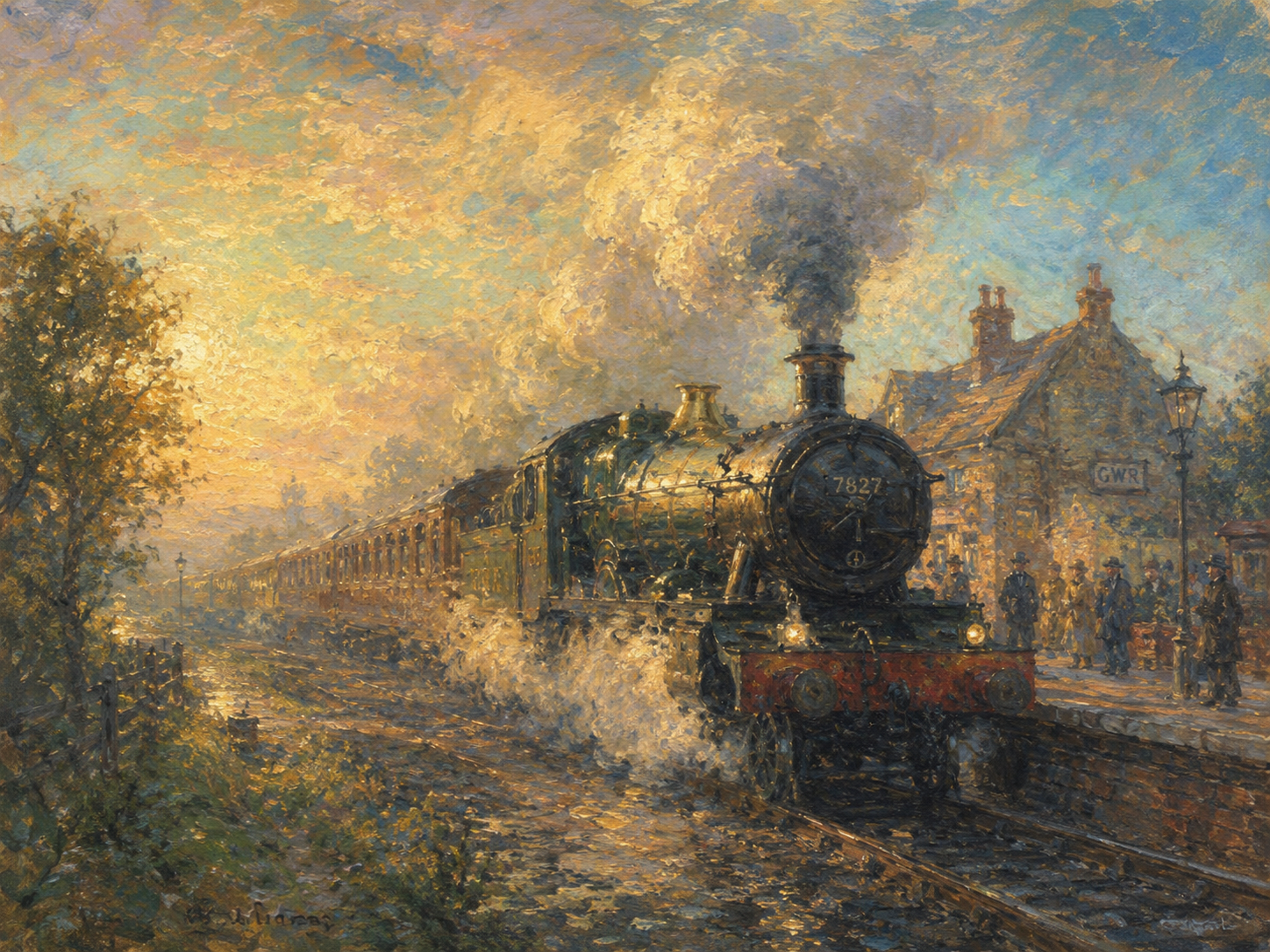
从前车马很慢,书信很远,一生只够爱一个人。
—— 木心,《从前慢》
When the first generative AI, ChatGPT, came to human history, everything changed. The way people work, the way they communicate, the way friends sit together and yet sit apart — one drafting with Claude, the other prompting Gemini, both in the same room, both somewhere else entirely.
Two years ago, we said AI should benefit the human race, not replace it. One year ago, people said repetitive work would go, but creative work was safe. Now? AI is in our everyday life in ways we could not have imagined. We use it before bed. We use it the moment we open our eyes. We use it for homework, for decision-making, for drafting emails we used to write in five minutes but now spend twenty minutes prompting to perfection. It seems like more than us accepting it — it has walked into our lives uninvited, and we have rearranged the furniture to make room.
And with that rearrangement comes a new species of anxiety. We worry about which AI to choose, who to subscribe to, how to learn faster, how to make them do things we don’t want to do ourselves. Things are advancing so fast, and so does the dread of falling behind.
I am a heavy user of AI. In 2023, I first used ChatGPT. I was learning very basic web scraping — the kind where you stare at a for loop and wonder why it only returns the first row. It was the era of GPT-3 and GPT-3.5, and they changed my learning the moment I touched them. Every bug I encountered, there was an all-knowing oracle to help me analyze and fix. I could understand why an error came up, even if I couldn’t always memorize the reason. I remember it was summer, and I spent the whole of it learning to code with AI beside me.
Later I went back to school — a place where phones and internet were banned. I had a smart watch that could share data to the classroom computer, and I used it to access AI while everyone else studied the old way. I was the only one in the room using it. I was really an early adopter.
I got a lot from AI. But I also lost a lot. It is only now that I am starting to see what.
It is June 2026 as I write this. I have tried every major $20 plan on the market. I have compared context windows, model intelligence, rate limits, and tool access until the spreadsheet in my head has more columns than my actual spreadsheets. And I find myself trapped — genuinely anxious — over which subscription to keep.
Some plans offer brilliant models but strangle you with session limits. Some give generous quotas but the intelligence is just not there. I have spent hours — real, irreplaceable hours — agonizing over this choice, and I suddenly realized: I haven’t been this anxious about a purchase decision in years. A tool should exist without me even noticing it is there, the way a good pair of glasses sits on your nose and you forget you are wearing them. Instead, AI has become a burden. Instead of me using the tool, the tool is using me.
There is a name for this. In 1865, the economist William Stanley Jevons observed that when steam engines became more efficient, people didn’t use less coal — they used more, because efficiency made coal worth applying to everything. The Jevons Paradox. It is happening with AI right now, not just at the level of corporations and labour markets, but at the level of a single person sitting in a dorm room at midnight, wondering whether to cancel ChatGPT Pro and switch to Claude, or keep both. The cheaper and smarter the models get, the more ambitious the things I try, the more tokens I burn, the more I spend — not just money, but attention, the only resource I truly cannot earn back.
Even when I let agents run overnight — setting up loops, scheduling tasks, letting code optimize itself while I sleep — the work doesn’t vanish. It transforms. I wake up to pull requests, experiment results, outputs that all need reviewing. The labour saved at midnight becomes cognitive overhead at 8 AM. The agents ran, but I’m the bottleneck now.
Andrej Karpathy, the man who coined “vibe coding” and co-founded OpenAI, said he went from writing 80% of his code by hand in November 2025 to writing essentially none of it by December. He calls this the “loopy era” — autonomous agents running experiments in loops, improving code while humans sleep. He set up a system that ran 700 experiments in two days, finding optimizations he had missed after twenty years of manual tuning. That is extraordinary. That is also terrifying. Because the person on the other side of that loop is no longer a coder. They are a reviewer, a judge, a manager of machines — and those roles carry their own exhaustion, their own quiet erosion of craft.
I look around, and I see people chasing speed as if slowness were a disease.
We optimize our mornings. We automate our reading. We let AI summarize books we will never open, generate images we will never paint, write words we will never feel in our fingers. And somewhere in the acceleration, we lost the thing that speed was supposed to buy us: time. Time to think slowly. Time to be bad at something. Time to sit with a problem long enough that the solution comes from inside you, not from a context window.
Looking back, I have long not taken off my glasses to compare the world of blur and clarity. I have long not wandered alongside the lake and appreciated the stillness of water. I have long not had any fun in the outfield, where the grass is real and the errors are yours and no one can ctrl+z them away.
人们太追求速度了,反而忽视了过程中的沉淀与成长。
We are so busy arriving that we have forgotten what it means to travel.
These violent delights have violent ends, And in their triumph die, like fire and powder, Which, as they kiss, consume.
—— Shakespeare, Romeo and Juliet, II.vi
I used to think that line was only about love. Now I think it is about everything that arrives too fast and too bright. AI is a violent delight. It is beautiful, and it is consuming. It has given me superpowers I could not have dreamed of three years ago — I have built infrastructure, organized tournaments, shipped tools, written in two languages with a fluency that surprises even me. But it has also eaten hours I will never get back, hours spent choosing between models instead of choosing what to think about, hours spent optimizing workflows instead of asking whether the work itself was worth doing.
The Little Prince waters one rose. He does not A/B test forty roses and pick the one with the highest engagement. Maybe there is wisdom in that.
I don’t know what the right relationship with AI looks like. I don’t think anyone does yet. But I suspect it starts with a simple discipline: the tool should serve you so quietly that you forget it is there. The moment it demands your attention — the moment you are anxious about it rather than about the thing you are trying to do — something has gone wrong.
从前车马很慢。Maybe not everything about that slowness was a limitation. Maybe some of it was grace.
I think I will go for a run.
LOL, I didn’t go for a run, maybe Claude did. I’ll go for a shower.
Nighty night!


Leave a Reply